Transport automation milestones 2026: the definitive guide
Explore the transport automation milestones 2026, where driverless vehicles become a reality. Discover live deployments transforming logistics!
Transport automation milestones 2026: the definitive guide

Transport automation milestones 2026 mark the year driverless vehicles moved from controlled pilots to commercial reality. PepsiCo is running 35 autonomous trucks on public roads in Arizona, UNECE has published the first global regulatory framework for fully driverless systems, and Baidu’s Apollo Go holds a Level 4 robotaxi permit covering 80 km² in Switzerland. For logistics professionals and transport operators, these are not distant forecasts. They are live deployments reshaping freight, passenger services, and the compliance obligations that come with both.
1. What are the major autonomous trucking milestones in 2026?
Autonomous trucking has crossed from testing into commercial freight operations this year. PepsiCo is operating 35 driverless trucks commercially in Arizona as of june 2026, moving consumer goods on public roads without safety drivers. That scale confirms autonomous freight is no longer a proof-of-concept exercise.
Volvo is preparing to go further. The company plans fully driverless highway operations on the US Sunbelt corridor starting Q1 2027, removing safety drivers entirely. That timeline gives logistics operators less than twelve months to assess how driverless freight fits their own network planning.
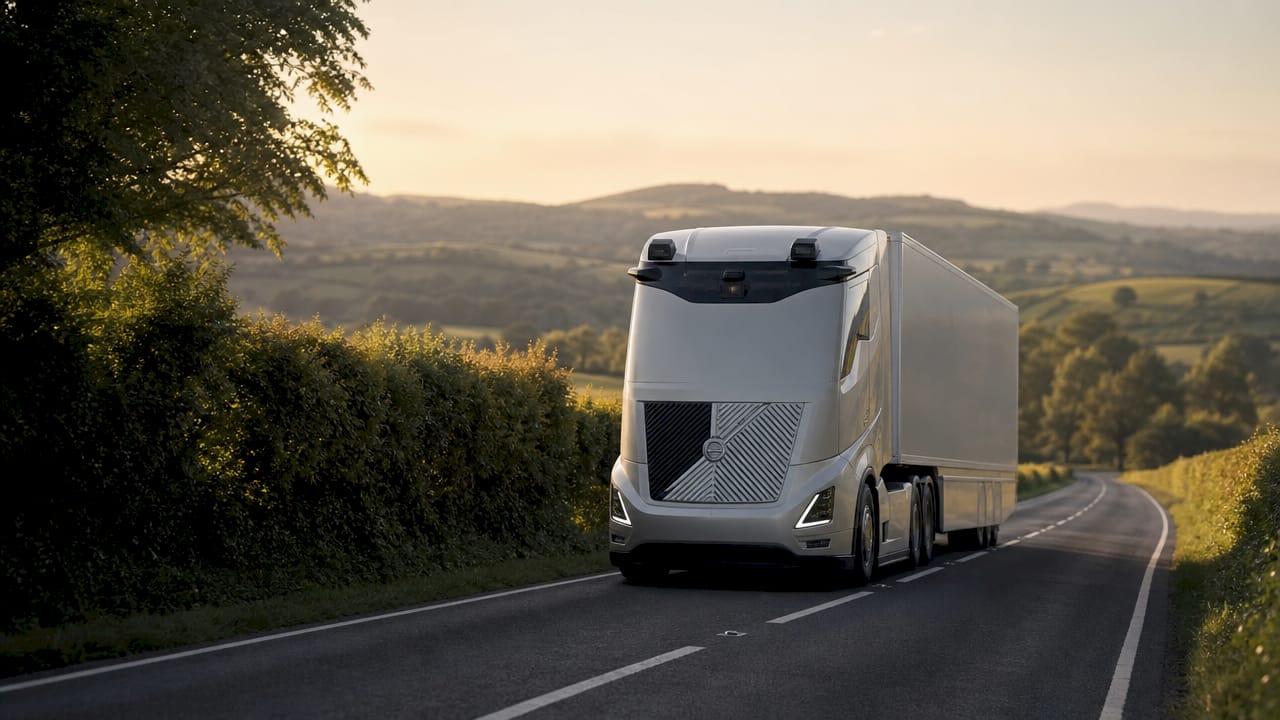
The most technically significant development is Waabi’s AI virtual driver. It operated on Volvo’s platform without retraining, a capability known as zero-shot generalisation. This means the same AI software can run across different truck models without starting from scratch, which dramatically reduces the cost and time of scaling autonomous fleets.
Integrating autonomous trucks into existing freight operations requires more than the vehicles themselves. Operators must connect operational technology (OT) systems with IT infrastructure to manage vehicle data, routing, and compliance records securely. Without that integration, the efficiency gains from driverless trucks cannot be captured at scale.
Pro Tip: Document your safety management systems before you need them. Regulators require audited evidence of continuous performance monitoring, and operators who build that documentation habit early will move through approval stages faster.
2. Which regulatory frameworks are enabling autonomous vehicle deployment?
Regulation is the single biggest enabler of large-scale autonomous deployment in 2026. UNECE approved the first global framework for fully autonomous driving systems in june 2026, setting mandatory requirements for audited safety management and data storage across the vehicle lifecycle. This gives manufacturers and operators a consistent international standard to build against.
The framework has three practical implications for transport operators:
- Audited safety management systems are now a legal requirement, not a best practice. Operators must demonstrate documented, ongoing safety oversight to regulators.
- Lifecycle performance monitoring means data must be collected and stored continuously, not just during incident reviews. This creates new data management obligations.
- Liability clarity improves when operators follow the framework, because documented compliance provides a defensible record in the event of an incident.
Switzerland’s Federal Roads Office (FEDRO) issued a Level 4 permit to Baidu’s Apollo Go, covering an 80 km² service area for robotaxi operations. Level 4 means the vehicle handles all driving tasks within that defined area without any human intervention.
The UK government launched self-driving vehicle pilot schemes in 2026, allowing commercial passenger-carrying services subject to rigorous safety assessments and local authority consents. These pilots are building the regulatory evidence base that will underpin full commercial licences.
“Regulators demand comprehensive safety evidence with audited management systems and ongoing performance data as a prerequisite for authorising full commercial autonomous deployments.” — UNECE autonomous vehicle regulatory framework
3. How are autonomous passenger services expanding in 2026?
Autonomous passenger services are scaling beyond freight corridors into urban public transport. Baidu’s Apollo Go, operating as AmiGo in Switzerland, holds a Level 4 robotaxi permit covering a substantial urban service area. This is the first deployment of its kind in Europe at this regulatory level, and it sets a precedent for other cities assessing similar permits.
Atlanta launched a 12-month autonomous transit shuttle pilot, giving city authorities and operators a structured window to gather real-world performance data. The pilot follows a progressive rollout model:
- Human safety operators remain present during the initial phase, monitoring system behaviour.
- Passenger booking capabilities are active, meaning members of the public can use the service through standard booking channels.
- Performance data feeds directly into the regulatory review that will determine whether the service continues without safety operators.
The UK’s pilot schemes follow a similar pattern. Supervised passenger services run first, with the data collected informing the next regulatory stage. This approach reduces the risk of a single incident halting an entire programme.
Pro Tip: Partnering with an established national transit operator is the fastest route to autonomous passenger deployment. It bypasses fragmented local licensing processes and provides an existing safety management framework you can build on.
4. What AI and data infrastructure innovations are driving transport automation?
The defining transport technology innovation of 2026 is not the vehicle. It is the software running it. Waabi’s zero-shot generalisation breakthrough means an AI virtual driver can transfer to a new truck platform without retraining. That capability collapses the time and cost of deploying autonomous systems across mixed fleets, which is the reality for most large operators.
Successful transport automation requires synchronous upgrades of both hardware and digital infrastructure, including OT and IT systems. Vehicle connectivity, real-time data exchange, and secure control systems all depend on that integration being in place before autonomous operations begin. Operators who treat the vehicle as the only investment consistently underestimate the infrastructure cost.
Continuous performance monitoring is now a regulatory requirement under the UNECE framework, not an optional feature. Operators must collect, store, and make available audit-ready data throughout the vehicle lifecycle. That requirement is reshaping how transport management platforms are built and selected.
The table below compares the core capabilities that differentiate automation-ready platforms from standard fleet management tools:
| Capability |
Standard fleet tools |
Automation-ready platforms |
| Real-time vehicle data |
Basic GPS tracking |
Full OT/IT integration with sensor feeds |
| Safety documentation |
Manual records |
Automated audit trail generation |
| AI decision support |
Rule-based alerts |
Predictive routing and anomaly detection |
| Regulatory reporting |
Periodic manual exports |
Continuous, structured data output |
| Multi-platform compatibility |
Single vehicle type |
Platform-agnostic across fleet types |
Pro Tip: Audit your current IT and OT systems before selecting an automation platform. The gap between your existing infrastructure and what autonomous vehicles require is usually larger than initial estimates suggest.
5. What do 2026 transport automation trends mean for operators?
The industry consensus has shifted from pilot projects to operational reality in 2026. That shift is not uniform across all vehicle types or geographies, but the direction is clear. Operators who treat automation as a future consideration rather than a current planning priority are already behind the curve.
The deployments gaining traction share a common characteristic: they operate in constrained environments. Highway freight corridors and dense urban cores with defined service areas are where autonomous systems are proving viable first. Open-road, mixed-condition deployments remain further out. That distinction matters for network planning.
Several trends define the current transport automation landscape for operators:
- Liability frameworks are maturing. The UNECE framework and national pilot schemes are building the legal infrastructure that makes autonomous operations insurable and commercially viable.
- Platform-agnostic AI is winning. Operators who commit to a single hardware vendor risk being locked out as the software layer becomes the primary differentiator.
- Data management is a competitive advantage. Operators with clean, structured performance data will move through regulatory approval stages faster than those without it.
- Congestion and public trust remain constraints. Dense urban deployments face political and social friction that technical capability alone cannot resolve.
For a broader view of how these trends connect to freight management strategy, the 2026 logistics landscape overview from Logivo covers the regulatory and operational context in detail.
Key takeaways
The most important transport automation development of 2026 is the convergence of commercial deployments, global regulatory frameworks, and platform-agnostic AI, which together make driverless operations a planning reality for logistics professionals, not a future aspiration.
| Point |
Details |
| Commercial trucking is live |
PepsiCo’s 35 driverless trucks in Arizona confirm autonomous freight has moved beyond pilots. |
| UNECE sets the global standard |
Audited safety management and lifecycle data storage are now mandatory for autonomous vehicle manufacturers. |
| AI software is the key differentiator |
Zero-shot generalisation means platforms like Waabi’s can scale across fleets without retraining. |
| Infrastructure investment is non-negotiable |
OT and IT integration must precede autonomous vehicle deployment for operations to function securely. |
| Constrained environments lead adoption |
Highway corridors and defined urban zones are where viable commercial deployments are happening first. |
Why 2026 is the year operators must stop watching and start planning
I have spent years watching transport operators treat automation as something to monitor rather than prepare for. The pattern is consistent: they follow the news, attend the conferences, and then wait for the technology to mature before committing resources. In 2026, that approach has a real cost.
The operators I find most credible right now are not the ones with the most advanced vehicles. They are the ones who have quietly upgraded their data infrastructure, built their safety documentation habits, and started conversations with regulators before they needed permits. PepsiCo did not deploy 35 driverless trucks overnight. That operation was built on years of data collection, system integration, and regulatory engagement.
The Waabi and Volvo zero-shot generalisation result is the development I think is most underappreciated. Most commentary focuses on the vehicles. The real story is that the software layer is now decoupled from the hardware. That changes the economics of scaling entirely, and operators who understand that will make better procurement decisions over the next two years.
My honest concern is that mid-sized operators will over-invest in specific vehicle platforms and under-invest in the digital infrastructure that actually determines whether automation delivers returns. The UNECE framework is clear: continuous, audited performance data is the price of entry. Build that capability now, regardless of which vehicles you eventually run.
— Vytautas
How Logivo supports operators navigating transport automation
The shift to automated transport operations creates new demands on the software running behind the scenes. Logistics professionals need platforms that handle job allocation, live tracking, and invoicing with the same reliability that autonomous vehicles demand from their own systems.
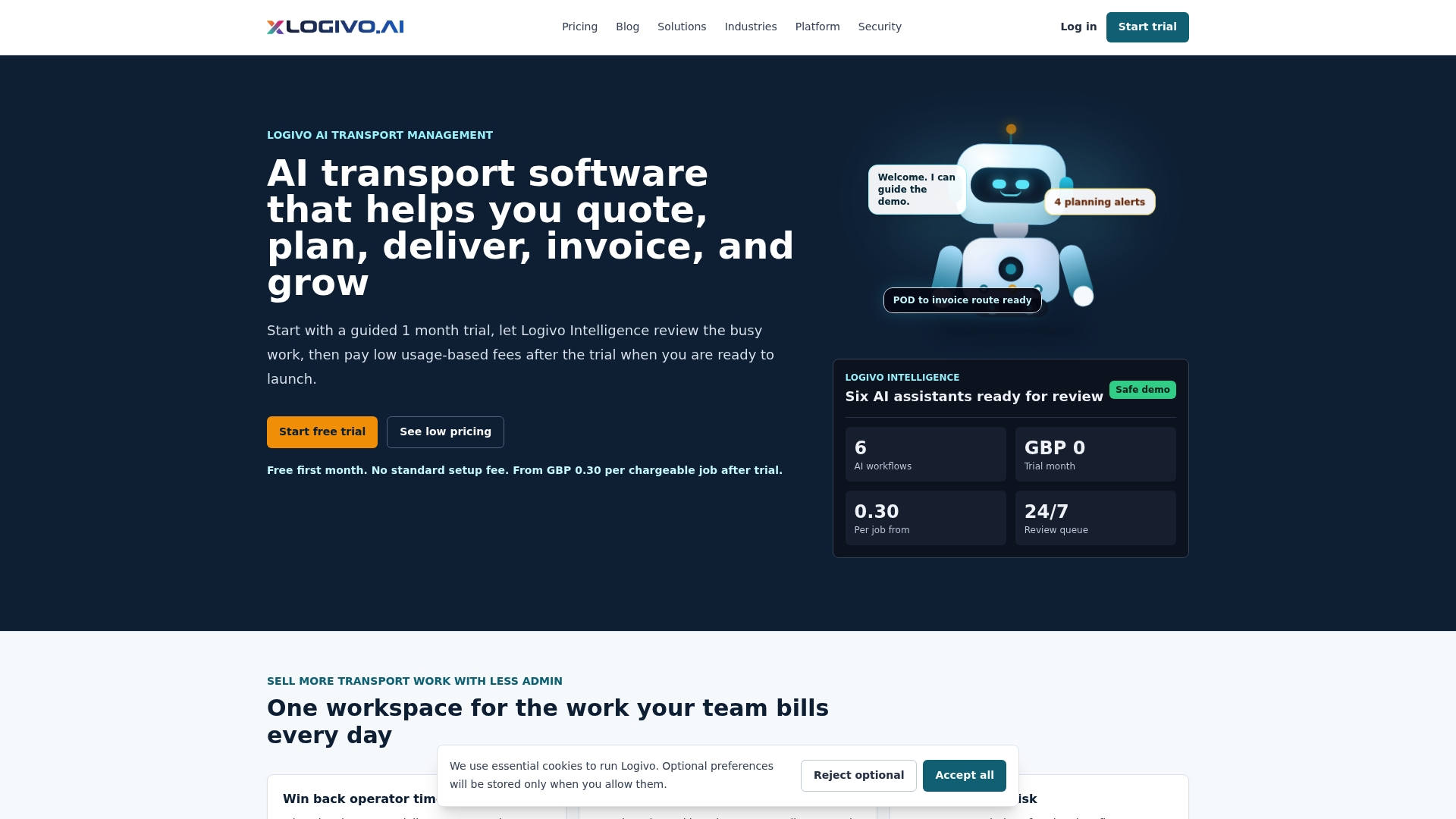
Logivo’s transport management software integrates AI-driven job allocation, real-time driver tracking, and automated invoicing within a single platform. Operators using Logivo report fewer invoicing errors and clearer operational visibility across their fleets. The live driver map gives dispatchers and customers accurate, real-time location data, which is the foundation any automated operation needs. Logivo offers a guided one-month trial, so you can validate whether the platform fits your operation before committing.
FAQ
What is the biggest autonomous trucking milestone of 2026?
PepsiCo’s commercial operation of 35 driverless trucks in Arizona is the most significant autonomous trucking milestone of 2026. It confirms that large-scale, driverless freight on public roads is commercially viable today.
What does the UNECE autonomous vehicle framework require?
The UNECE framework, approved in june 2026, requires manufacturers and operators to implement audited safety management systems and store continuous lifecycle performance data. These are mandatory conditions for authorising fully autonomous driving systems.
What is zero-shot generalisation in autonomous trucking?
Zero-shot generalisation means an AI virtual driver can operate on a new vehicle platform without being retrained on that platform’s specific data. Waabi demonstrated this capability with Volvo’s trucks, making it the most scalable approach for autonomous fleet expansion.
Are autonomous passenger services available to the public in 2026?
Yes. Baidu’s Apollo Go operates public robotaxi rides in Switzerland under a Level 4 permit covering 80 km², and the UK government has launched pilot schemes allowing commercial passenger-carrying self-driving services with local authority approval.
What infrastructure do operators need before deploying autonomous vehicles?
Operators must integrate their operational technology (OT) and IT systems to enable secure vehicle connectivity and real-time data exchange. Without that infrastructure, autonomous vehicles cannot be managed, monitored, or audited to the standard regulators now require.
Recommended