Low cost transport software benefits for small fleets
Discover the low cost transport software benefits for small fleets. Cut costs, automate workflows, and streamline route planning effectively.
Low cost transport software benefits for small fleets

Affordable transport management software, known in the industry as a Transportation Management System (TMS), gives small to mid-sized transport companies the tools to cut costs and reduce manual work without large upfront investment. Manual freight management using spreadsheets creates hidden costs and errors that erode margins over time. The low cost transport software benefits are most visible in three areas: expense control, route planning, and workflow automation. For companies running fewer than 50 vehicles, these gains arrive quickly and compound month on month.
1. Real-time expense management cuts admin time significantly
Traditional expense reconciliation in transport is slow and error-prone. Finance teams chase paper receipts, manually match fuel purchases to vehicles, and spend hours correcting misattributed costs. That process does not scale, and it leaves decision-makers working with data that is days or weeks out of date.
Digital expense tools solve this by issuing per-driver Visa debit cards linked directly to specific vehicles. Each transaction is attributed to a driver and vehicle automatically, giving you per-route cost visibility without any manual sorting. Fuel, tolls, and maintenance purchases appear in your dashboard the moment they happen.

The time saving is measurable. Finance teams save 8–10 hours of manual reconciliation work every month when managing a 15-vehicle fleet with digital tools. That is roughly one full working day returned to your team each month, which they can spend on decisions rather than data entry.
Pro Tip: Set individual spending limits on each driver card by expense category. This prevents overspending on non-essential purchases without requiring manual approval for every transaction.
- Per-driver cards eliminate the need to collect and sort paper receipts
- Real-time dashboards show fuel and maintenance costs by vehicle or route
- Budget alerts flag overspending before it becomes a problem at month end
- Finance teams close the books faster with clean, pre-categorised data
2. Native accounting integration removes duplicate work
Accounting integration is the feature most small transport businesses underestimate. Without it, your expense data lives in one system and your accounts in another, forcing someone to re-enter figures manually. That duplication creates errors and wastes time.
Integration with platforms like Xero automates invoicing and reconciliation entirely. Transactions flow directly from your TMS into your accounting software, matched and categorised. No re-keying, no mismatches, no end-of-month panic.
For small transport businesses, this integration matters more than advanced AI features. The operational savings from eliminating duplicate data entry outweigh the gains from predictive analytics until your fleet reaches a meaningful scale. Start with the basics done well, and the efficiency gains follow naturally.
Route optimisation is one of the clearest affordable transport software advantages. The software analyses delivery locations, driver hours, vehicle capacity, and road conditions to produce the most efficient sequence of stops. Drivers spend less time on the road, vehicles cover fewer miles, and fuel costs fall.
For a small fleet, even modest route improvements add up quickly. Reducing average daily mileage per vehicle by a small margin translates into meaningful fuel savings across a full year. Vehicle wear also decreases, which extends service intervals and reduces maintenance spend.
- Automated round planning removes the guesswork from daily dispatch
- Optimised routes reduce unnecessary mileage and idle time
- Timely deliveries improve customer satisfaction without extra cost
- Fewer miles mean lower tyre wear and reduced servicing frequency
Pro Tip: Review your route efficiency reports weekly rather than monthly. Small inefficiencies compound quickly, and catching them early prevents them from becoming habits across your driver team.
Automated shipment booking connects directly to route planning in a well-built TMS. When a new job comes in, the system slots it into the most efficient existing round rather than creating a separate trip. That single feature alone can eliminate several unnecessary journeys per week for a busy small fleet.
4. Workflow automation reduces errors and speeds up operations
Workflow automation in a TMS reduces errors, speeds booking, and improves shipment visibility across your entire operation. The practical impact is that your dispatch team stops chasing status updates by phone and your customers stop calling to ask where their delivery is.
The core automated workflows in a cost-effective TMS typically include:
- Load tendering: Jobs are assigned to drivers automatically based on availability, location, and vehicle type, removing the need for manual dispatch calls.
- Real-time tracking: Customers and internal teams see live shipment status without anyone needing to update a spreadsheet or send a message.
- Invoice matching: The system matches delivery confirmations to invoices automatically, catching discrepancies before they reach the customer.
- Performance reporting: Analytics show on-time delivery rates, cost per job, and driver performance without anyone building a report manually.
- Communication logs: All driver and customer communications are recorded in one place, reducing disputes and improving accountability.
TMS platforms enable rate comparison, shipment tracking, and report generation to improve freight decisions. That combination replaces the guesswork that comes with manual management and gives you a factual basis for choosing carriers and planning capacity.
Analytics are where affordable transport software advantages extend beyond simple cost savings. When you can see which routes are most profitable, which drivers have the best on-time rates, and which customers generate the most admin work, you make better decisions about where to focus your resources.
5. Choosing between off-the-shelf and custom TMS solutions
The choice between off-the-shelf and custom TMS software is the decision that most directly affects your upfront cost and time to benefit. Getting it wrong in either direction is expensive.
An off-the-shelf, cloud-based TMS is a pre-built platform available on a monthly subscription. Cloud-based TMS solutions offer fast deployment and lower initial investment compared to custom development. You can typically be operational within days rather than months, and the subscription cost is predictable.
A custom TMS is built specifically for your business. It fits your exact processes but requires significant development time and upfront cost. The break-even point matters here: custom development becomes cost-effective only after 18–24 months if your annual licensing costs exceed $50,000. Below that threshold, off-the-shelf is almost always the better financial decision.
| Criteria |
Off-the-shelf TMS |
Custom TMS |
| Upfront cost |
Low subscription fee |
High development cost |
| Deployment time |
Days to weeks |
Months |
| Customisation |
Moderate, via configuration |
Full, built to spec |
| Best suited for |
Under 50 shipments per day |
Complex, unique workflows |
| Break-even point |
Immediate |
18–24 months |
Pro Tip: Start with an off-the-shelf solution and document every workaround you build within it. Those workarounds become your specification document if you ever commission a custom build later.
For most small to mid-sized transport companies, the best transport management software is a cloud-based off-the-shelf platform that integrates with your existing accounting software. The speed of deployment and the low initial cost mean you start seeing returns within the first month rather than waiting for a lengthy implementation.
6. How centralised visibility improves day-to-day decisions
Centralised visibility is the benefit that ties every other feature together. When expense data, route performance, driver status, and customer communications all live in one place, your managers stop spending time gathering information and start spending time acting on it.
Affordable TMS platforms provide metrics that replace manual guesswork with factual performance data. A transport manager who previously spent an hour each morning calling drivers for status updates can instead open a single dashboard and see everything at once. That hour compounds across a team of five managers into a significant weekly saving.
The visibility benefit also extends to your customers. Real-time tracking means they know where their delivery is without calling your office. That reduces inbound enquiries, which frees your team further. For small transport businesses where one person often handles both dispatch and customer service, that reduction in inbound calls is genuinely significant.
For a practical guide on setting this up affordably, the low cost transport automation setup resource from Logivo covers the implementation steps in detail.
Key takeaways
Affordable transport management software delivers the clearest returns for small to mid-sized fleets through expense automation, route efficiency, and centralised visibility, not through expensive custom builds or advanced features.
| Point |
Details |
| Expense automation saves time |
Finance teams recover 8–10 hours per month by replacing manual reconciliation with digital tools. |
| Accounting integration is critical |
Native Xero or equivalent integration eliminates duplicate data entry and reduces invoicing errors. |
| Off-the-shelf suits most SMBs |
Cloud-based TMS is cost-effective until annual licensing exceeds $50,000, when custom becomes viable. |
| Route optimisation cuts fuel costs |
Automated round planning reduces mileage, vehicle wear, and servicing costs without extra headcount. |
| Centralised data improves decisions |
One dashboard replacing multiple manual processes frees managers to act on information rather than gather it. |
Why I think most small fleets overbuy on features
The most common mistake I see small transport operators make is choosing software based on its feature list rather than its fit. A platform with AI-driven demand forecasting sounds impressive, but a 12-vehicle courier operation does not need demand forecasting. It needs clean invoicing, real-time driver visibility, and an accounting integration that actually works.
The second mistake is underestimating integration. I have watched businesses spend months evaluating TMS platforms and then choose one that does not connect to their accounting software. They end up re-entering data manually, which defeats the entire purpose. Native Xero or equivalent integration is not a nice-to-have. It is the feature that determines whether the software actually saves time.
My advice is to start with the smallest plan that covers your core three needs: expense tracking, route planning, and accounting integration. Use it for three months. Document what you cannot do. Then decide whether you need more. Most small fleets find that the basics, done well, are enough to run a significantly tighter operation. The transport operations management improvements from getting those three things right are more valuable than any advanced feature you might add later.
— Vytautas
Logivo gives small transport companies affordable operational control
Logivo is built for transport companies that need real results without enterprise-level pricing. Its AI-driven platform automates job allocation, delivery tracking, and invoicing in one place, reducing the administrative load that slows small teams down. Firms using Logivo report fewer invoicing errors and clearer operational visibility from day one.
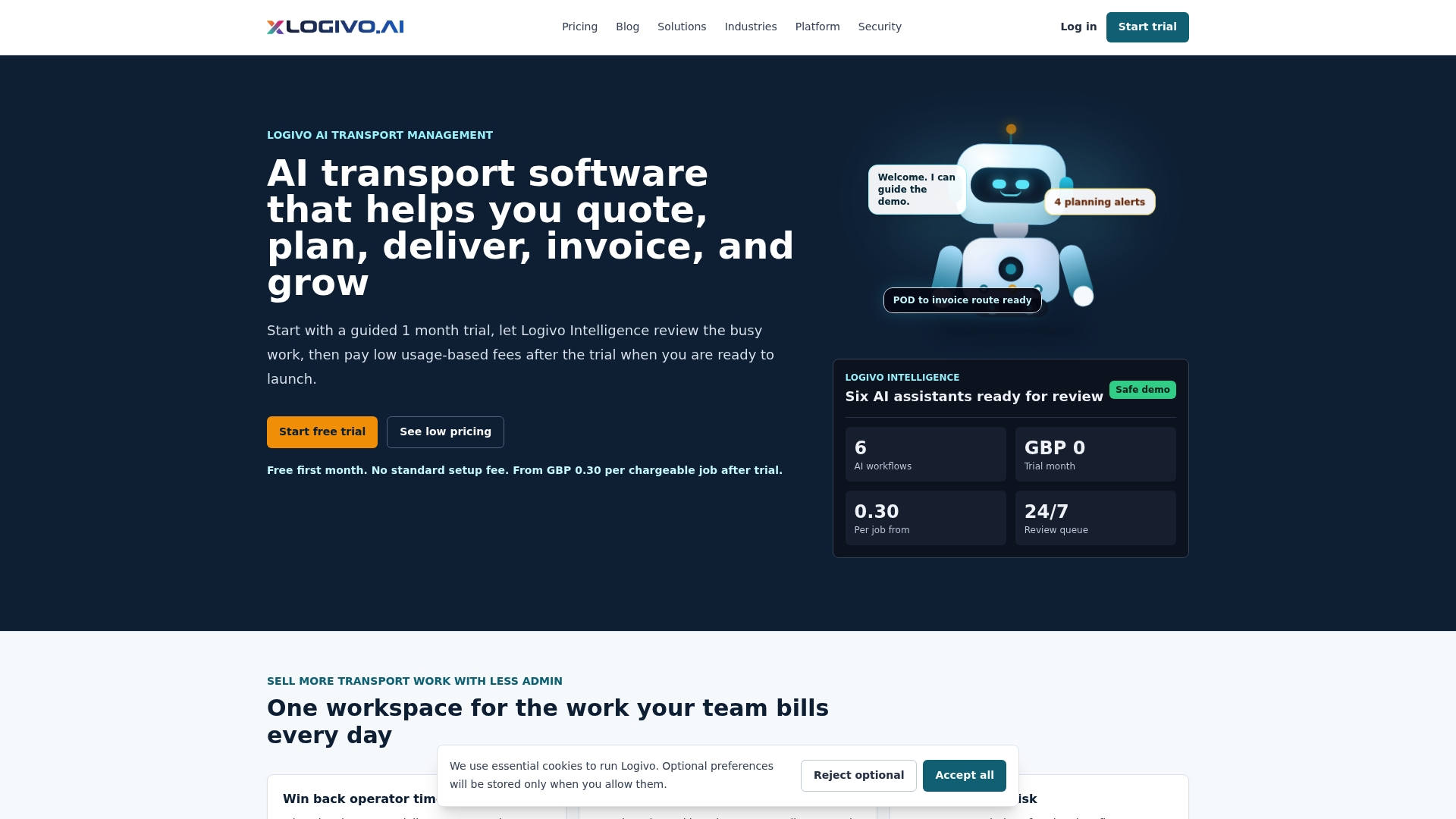
The guided one-month trial lets you validate the platform against your actual operations before committing. Features like the live driver map give your team and your customers real-time visibility, while the transport finance tools connect directly to your accounting workflow. For small to mid-sized fleets, that combination covers the three core needs without unnecessary complexity.
FAQ
What are the main low cost transport software benefits?
The main benefits are reduced admin time, lower fuel costs through route optimisation, and fewer invoicing errors through automation. Finance teams typically recover 8–10 hours per month from digital expense management alone.
Is off-the-shelf TMS software good enough for small fleets?
Off-the-shelf cloud TMS is the right choice for most small fleets. It deploys quickly, costs less upfront, and becomes cost-effective immediately, unlike custom builds which only break even after 18–24 months.
How does transport software reduce invoicing errors?
Automated invoice matching compares delivery confirmations against invoices in real time, flagging discrepancies before they reach the customer. This removes the manual checking step that causes most errors in small transport businesses.
Good off-the-shelf TMS platforms integrate natively with Xero and similar accounting software. That integration automates reconciliation and removes the need to re-enter transaction data manually.
When should a small transport company consider custom TMS software?
Custom TMS development only makes financial sense when annual licensing costs exceed $50,000 and your workflows are too complex for off-the-shelf configuration. Below that threshold, a cloud-based subscription platform delivers better value.
Recommended