Top 6 CargoPro.ai Software Alternatives 2026
Explore 6 CargoPro.ai alternatives to choose the best transport management software for optimising your operational efficiency.
Top 6 CargoPro.ai Software Alternatives 2026

Shifting to transport management software that fits existing workflows, cost limits, and regional needs is harder than necessary for operations teams. Most mainstream platforms target either global enterprises with custom pricing or small firms, with little clarity on integration, trial length, or total ownership costs. Pricing, integration, and workflow detail across six alternatives let operations teams match the right software to their process without committing up-front budget.
Table of Contents
Logivo
At a Glance
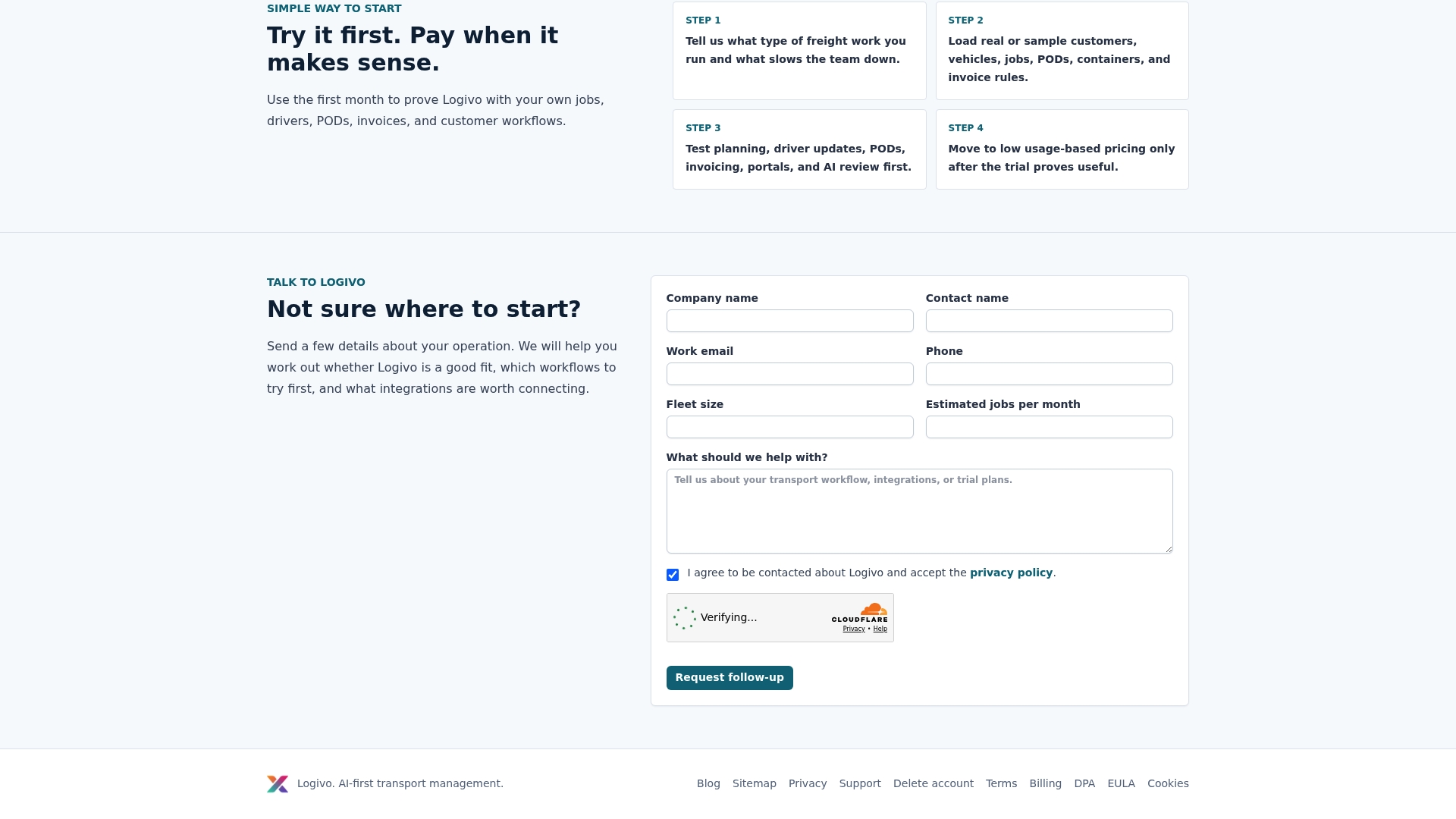
Pricing starts from $0.40 per chargeable job. The vendor advertises a guided one-month trial so teams can validate AI recommendations without an upfront licence fee. Logivo targets trucking, freight, and drayage operations with connected job-to-invoice workflows and role-based security. The system emphasises reducing manual admin across dispatch, drivers, and finance.
Core Features
Logivo provides a connected workflow from booking to invoice handover, linking dispatch, driver updates, proof of delivery, and finance in one control space. The product includes AI-assisted job intake for planning and document review, plus invoice blocker detection to cut billing errors. A driver app offers multilingual mobile workflows, defect reporting, and POD capture, while tenant-safe, permission-checked architecture and APIs support integration with accounting, telematics, EDI, and portals.
Key Differentiator
AI-assisted workflow automation tuned specifically for freight and trucking operations in the United States separates Logivo from general transport tools. That focus shapes its intake rules, document parsing, and driver workflows to match common US freight and drayage patterns.
Pros
Logivo groups traffic, drivers, and finance into a single control space so teams stop juggling spreadsheets and message threads. The vendor advertises flexible, usage-based pricing with no seat or setup fees, which lowers initial procurement friction. AI features take over repetitive tasks such as document triage, POD review, and invoice checking while the driver app supports multilingual workforces. Robust connectors to accounting and telematics reduce double entry and accelerate handover to finance.
Cons
- The AI requires operator oversight. The system supports decisions but does not assume legal or compliance authority, so human review remains necessary.
Notable Integrations
- Xero
- Sage Accounting
- QuickBooks Online
- Fleetalyse tracker
- Destin8 port container data
- Google Workspace
- Microsoft 365
- API and webhooks
Who It’s For
Transport operations teams in trucking, freight, and drayage that need an AI-enabled, integrated workflow to cut manual admin will find Logivo relevant. Dispatchers and finance teams collecting PODs, reconciling invoices, and linking telematics to billing benefit most. The product suits operators who can commit a little training time to realise the feature set.
Unique Value Proposition
A guided one-month trial combined with pay-per-job billing reduces up-front risk for operators moving from manual processes. That trial lets you test AI recommendations against your workflows and billing practices before wider roll-out. For teams moving invoicing and POD capture from paper and spreadsheets to software, this lowers procurement friction and budgetary risk.
Real World Use Case
A freight operator uses Logivo to receive bookings, assign jobs, and push tasks to drivers via the mobile app. Drivers upload PODs in multiple languages and the AI flags invoice blockers for review. Finance receives cleaner handovers and spends less time chasing paperwork.
Pricing
From $0.40 per chargeable job, plus usage-based fees for AI, POD review, and driver checks. The vendor lists no seat or setup fees and charges scale with volume rather than by user count.
Website: https://logivo.ai
Bluerock TMS

At a Glance
Bluerock TMS reports more than 750K+ drivers using its mobile app, and the vendor claims 125MM+ planned shipments and 10K+ carriers involved. The platform targets large, complex supply chains and emphasises live operational control across last mile, LTL, and FTL. Adoption figures suggest heavy enterprise use rather than a small fleet focus.
Core Features
The product centres on a real-time logistics control tower that surfaces live events and exceptions for planners and operations teams. It offers integrations with ERP, WMS, and carrier systems and delivers visibility designed to trigger operational actions. According to the vendor, the platform holds ISO 27001 certification and GDPR compliance for data protection.
Key Differentiator
Bluerock TMS positions itself as a cloud native system with a genuine control tower for continuous oversight and decision making. The modular architecture lets enterprise buyers add regions and modules as needs change. That design suits organisations that expect growth or variable geography requirements.
Pros
The platform covers the full transport spectrum from last mile through FTL and LTL, which reduces the need for separate point solutions. Enterprise customers benefit from flexible workflows and the kind of visibility that supports carrier management and exception handling. Those adoption figures above back the vendor claim of broad industry uptake among carriers and drivers, which helps with carrier onboarding and network effects.
Cons
- Limited public documentation about specific feature depth makes evaluation harder for technical teams.
- The vendor does not publish transparent pricing or module costs, complicating total cost of ownership estimates.
- Implementation complexity may be high for smaller or less technologically mature organisations.
When It May Not Fit
Small transport operators or teams without dedicated IT resources will likely find the platform heavyweight. If you run single-country, single-vehicle operations, the modular and enterprise focus will add unnecessary overhead. Buyers seeking clear, published pricing for rapid procurement will need to ask sales for custom figures.
Who It’s For
Bluerock TMS suits enterprise logistics teams, supply chain managers, and transport directors in manufacturing, retail, healthcare, and distribution sectors. It works best where multiple carriers, high shipment volumes, and regional expansion create real value from a control tower. Choose this when you need carrier orchestration and high levels of visibility.
Real World Use Case
A multinational retail chain connected its regional carrier networks and last mile partners to Bluerock TMS to centralise tracking and reduce delivery misses. Planners used the control tower to reroute failed deliveries and to balance loads across carriers. That deployment reduced manual intervention in carrier management and improved on-time performance metrics.
Pricing
The vendor does not list standard pricing or starter tiers publicly. Pricing appears to be negotiated per customer, reflecting module selection, regions, and onboarding scope. Contact sales for a tailored commercial proposal.
Website: https://bluerocktms.com
oTMS
At a Glance
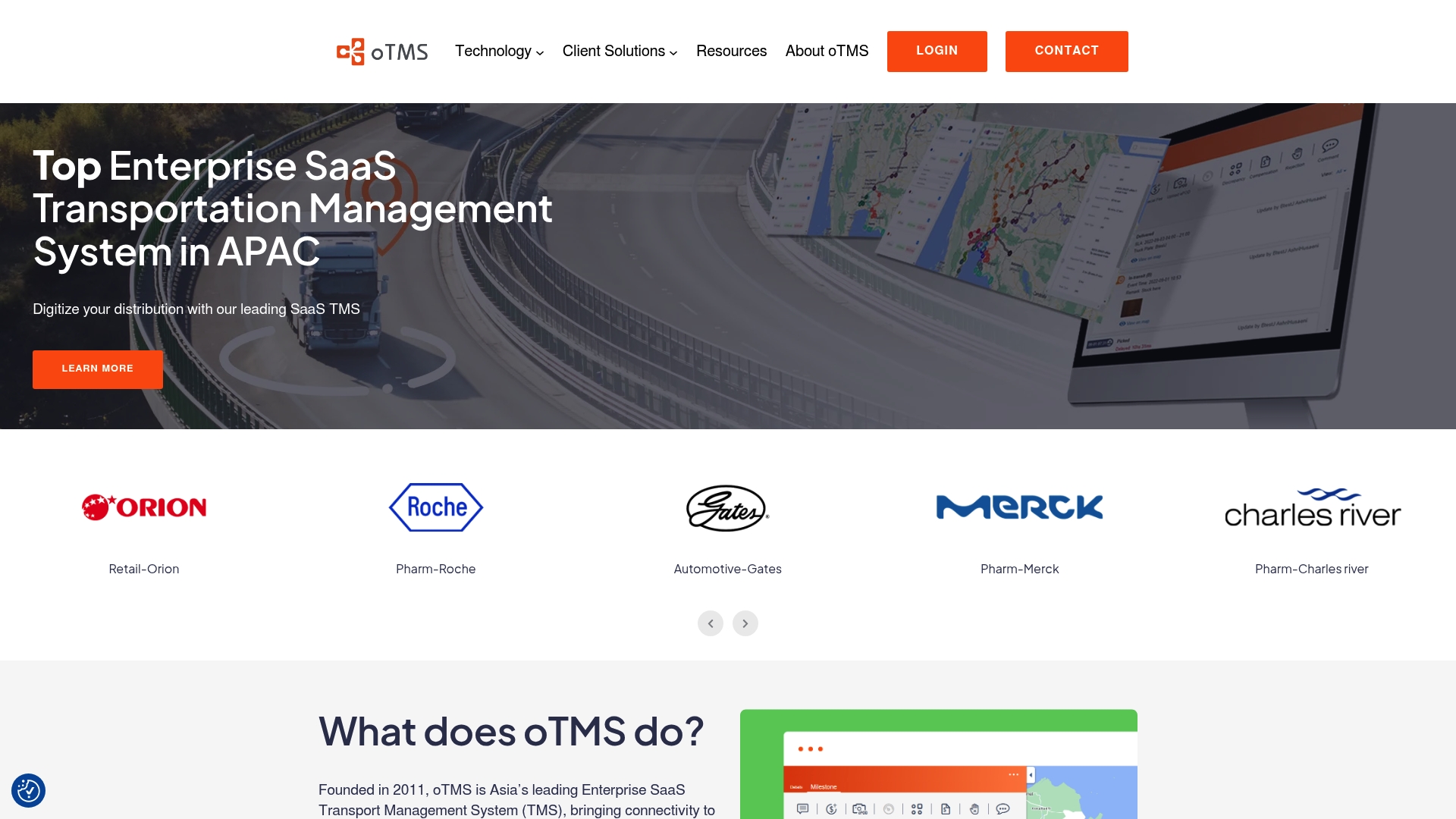
oTMS reports it processes over 700 million shipments and connects 9,000 road carriers and 600,000 drivers across seven countries. The vendor says the platform has operated since 2011 and uses a cloud-based SaaS architecture. oTMS also holds ISO27001 certification and appears in Gartner’s Magic Quadrant for TMS.
Core Features
oTMS exposes 35 open APIs to link carriers, shippers, and warehouse systems. The suite covers order intake through billing and includes planning and optimisation for routes and loads. Execution capabilities include live tracking, digital reciprocal ePODs and a freight settlement module for billing and cost control.
Key Differentiator
oTMS positions itself on strength of regional scale and market recognition. The vendor combines wide connectivity, automation tools and analytics tuned to APAC transport networks. That focus on regional coverage is the clearest difference versus global TMS vendors that favour Euro or North American markets.
Pros
oTMS gains credibility from a long track record across Asia and its Gartner listing, which supports vendor recognition. Its connectivity options and open APIs simplify integration with ERP, WMS and fleet telematics. The platform bundles planning, execution, settlement and BI in one suite, which reduces the number of point solutions you must manage. The cloud architecture and ISO27001 security stance make the platform suitable for organisations with strict data controls.
Cons
- Implementation can be complex. Third-party reviews indicate projects often need significant technical and change management resources.
- Customisation and scaling can demand dedicated support. Clients report higher internal resource needs for large deployments.
- Training is required to get full value. Several customers note a measurable ramp for operations and driver adoption.
When It May Not Fit
oTMS may be a poor choice for small carriers or regional operators that lack IT teams to manage a complex rollout. If you need a lightweight TMS with minimal onboarding, the platform may feel heavyweight. Organisations seeking a plug-and-play solution with limited customisation will find it a mismatch.
Notable Integrations
oTMS connects to standard enterprise stacks and field systems used in logistics. Notable integrations include ERP systems, WMS, OMS, IoT platforms and GPS systems. These links let you bring booking, warehouse events and telematics into a single operations view.
Who It’s For
oTMS suits large logistics and supply chain enterprises operating in Asia-Pacific. It fits firms that manage carrier networks and require cross-border shipment visibility. Use it where you can dedicate technical resources to integration and process change.
Real World Use Case
A multinational manufacturer adopted oTMS to unify cross-border transport across Asia-Pacific. The company used route optimisation to reduce mileage and to tighten estimated arrival times. Live tracking and centralised settlement shortened dispute resolution between carriers and the shipper.
Pricing
Not applicable — informational only. Public pricing is not listed; enterprise deals are negotiated and typically reflect deployment scope and integration effort.
Website: https://otms.sg
fireTMS
At a Glance
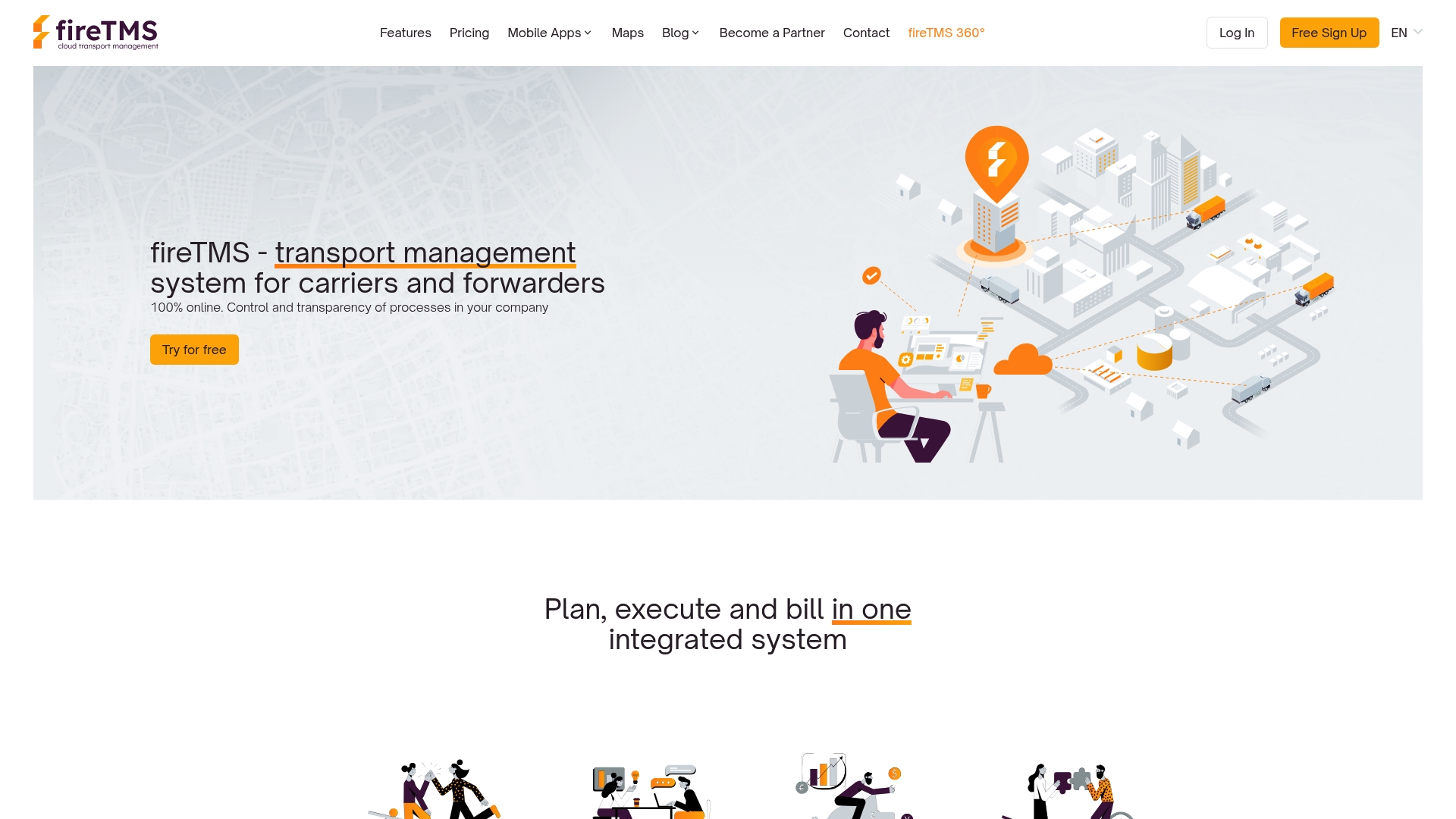
The vendor lists pricing starting from 85 €/month. fireTMS combines GPS tracking, order handling, route planning, and invoicing in a single cloud based system. The platform is accessible 24/7 from web and mobile apps, which suits teams that need live visibility on drivers and fleets.
Core Features
fireTMS covers transport planning with vehicle and driver scheduling and offers order management that shows real time status and direct driver communication. The system links finance and accounting modules to support automatic invoicing and debt collection while providing time and cost optimisation tools. Mobile applications let drivers and dispatchers report status, receive tasks, and share location from the road.
Key Differentiator
fireTMS focuses on bringing planning, execution, telematics, and billing into one operational environment rather than splitting those tasks across separate systems. That single system approach reduces handoffs between planning and finance teams and keeps operational data in one place. It fits carriers and forwarders that want fewer integrations and a uniform operational view.
Pros
The platform automates multiple logistics steps so operations staff spend less time on manual paperwork and phone calls. Its cloud based delivery means you can access schedules and live GPS data from anywhere without local installs. Integration paths to accounting packages and telematics providers reduce double entry and speed up invoice reconciliation. Mobile apps for drivers and dispatchers keep field teams connected to the office and to order status updates.
Cons
- Trial details are limited. Prospective buyers must contact sales to confirm trial length and scope.
- Pricing may be costly for very small operators. The vendor offers tiers, but total cost depends on company size and selected modules.
- Some smaller companies may find the system complex to set up and use until processes are adapted.
When It May Not Fit
If your operation runs only a handful of vehicles and you lack IT support, fireTMS may feel heavier than needed. Organisations with negligible invoicing complexity will not get full value from the finance integration. If you require a no-friction trial without sales contact, the limited public trial information could frustrate procurement.
Notable Integrations
- GPS telematics providers for live location and driver tracking.
- Accounting software including Small Business, Sage, WFirma, Insert Subiekt, and Comarch ERP.
- Freight exchange and external platforms such as freight exchange fireXgo, Trans.eu, and Transporeon.
Who It’s For
Transport and forwarding companies of all sizes that want to centralise planning, execution, and billing will find fireTMS relevant. It suits teams that need live GPS visibility and those that already use local accounting software and want tighter integration. Mid sized freight forwarders looking to reduce administrative overhead will gain the most immediate benefit.
Real World Use Case
A medium sized freight forwarder uses fireTMS to schedule routes and assign drivers, then monitors vehicles live via GPS. Drivers update order status through the mobile app, which triggers automatic invoice creation after delivery. The operations manager uses built reports to spot empty runs and adjust future planning.
Pricing
The vendor lists a starting price of 85 €/month. That starting figure applies to an entry tier, with various tiers based on company size and needs. Billing can be monthly or annual depending on the selected plan.
Website: https://firetms.com
TMS.ai
At a Glance
TMS.ai reports more than 100,000 users across North America. The vendor advertises a 4.8/5 rating on G2 and Capterra and reports $2.7bn in processed volume for 2025, and the company says it will deliver a guaranteed go-live within 90 days. These claims position the product as a configurable, AI-native freight management option for operators handling complex workflows.
Core Features
TMS.ai combines deeply configurable workflows with no-code tools, so teams can build custom order lifecycles, role boards, and lane-level pricing rules without writing code. The system offers real-time freight visibility in a single pane and embedded AI agents for route optimisation and order processing. Integrations with telematics, accounting, and data exchange systems tie live tracking and back-office workflows together.
Key Differentiator
The platform’s standout point is its level of configurability paired with embedded automation. The vendor highlights no-code customisation plus AI agents that automate edge-case workflows, which suits operations that must shape the TMS to irregular processes rather than change those processes to fit the software.
Pros
Highly flexible configuration lets operations map unusual order stages and bespoke proof of delivery workflows without developer cycles. That flexibility comes with rapid deployment promise, and the enterprise-grade volume and rating figures cited by the vendor give confidence to buyers evaluating reliability. All packages include unlimited users and custom fields, which removes licence management friction as teams scale.
Cons
- Complexity may overwhelm teams seeking a simple, ready-made TMS; training investment is likely.
- Pricing is customised and starts at a relatively high base, which may not suit very small operators.
- Some advanced security features such as single sign-on and SAML are restricted to enterprise plans.
When It May Not Fit
Operations with straightforward, standardised workflows and tight budgets will find TMS.ai too elaborate and costly. Small carriers who need a plug-and-play TMS with minimal setup will prefer simpler offerings. Regulated organisations that need advanced security controls out of the box may need to budget for enterprise-level plans.
Notable Integrations
- Verizon
- GPSTab
- Surfsight
- Azuga
- Truckstop
- Motive
- ERoad
- Samsara
Who It’s For
Freight brokers, carriers, and enterprise shippers that require deep customisation, automation, and broad telematics connectivity. Teams that have or can assign a configuration lead will extract the most value from the no-code tools and rule engines. Organisations planning multi-site rollouts will benefit from unlimited users and flexible rate management.
Real World Use Case
A regional carrier deployed TMS.ai to automate dispatching, route planning, and live tracking across several depots. The configuration allowed bespoke POD stages per customer and cut manual data entry, freeing dispatch teams to handle higher volumes and more exception cases.
Pricing
Starting at $2,080/month, with customised quotes based on specific operational needs and integration requirements. The vendor structures final pricing around deployment scope and chosen features.
Website: https://tms.ai
FTM (Freight Transportation Manager) on Salesforce
At a Glance
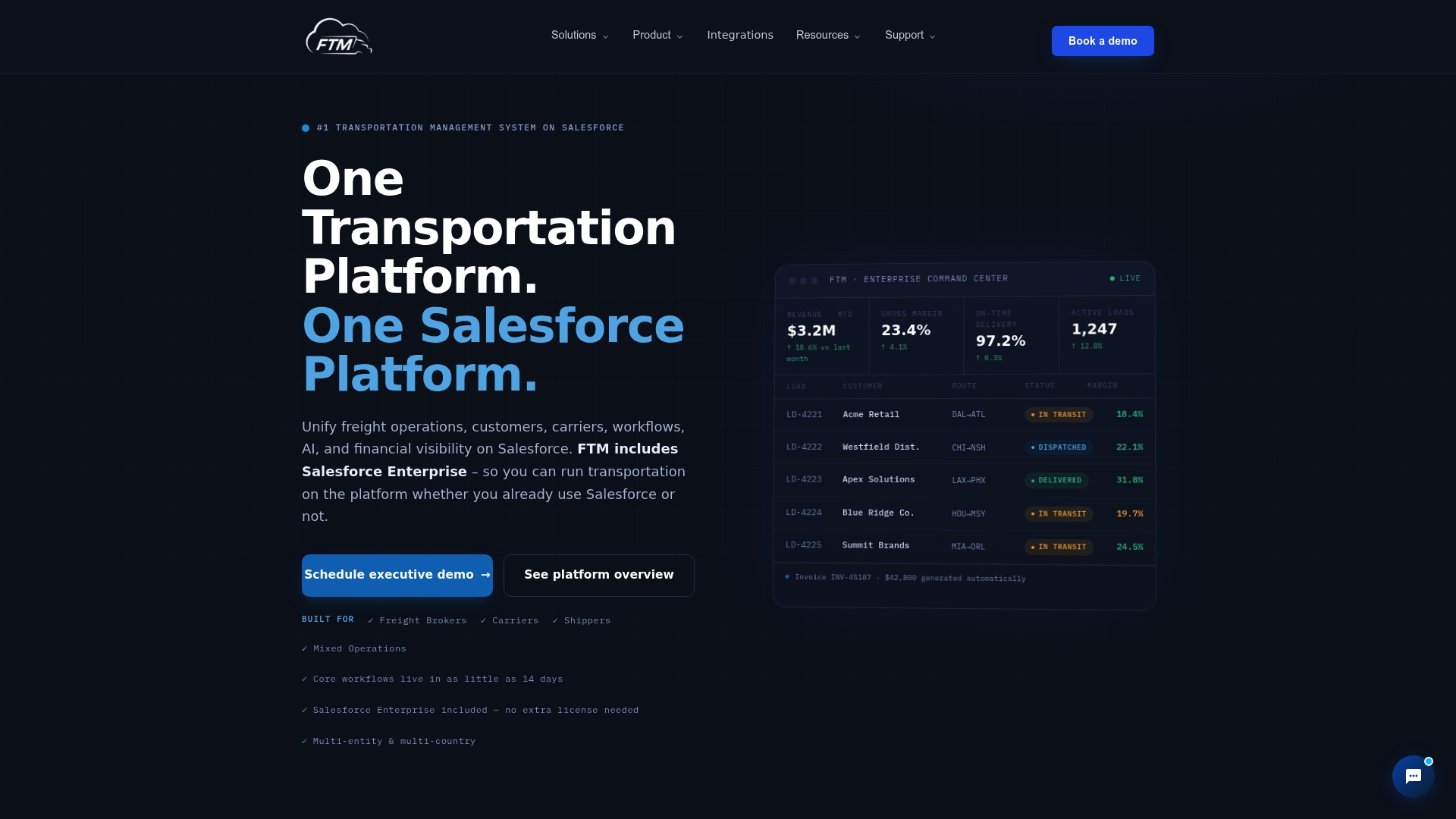
The vendor advertises implementations for core workflows in as little as 14 days. FTM runs directly inside Salesforce so operational and financial data share the same record. The product supports real-time dispatch visibility, carrier onboarding, private load boards, and an AutoFill feature for document reading.
Core Features
FTM uses native Salesforce objects and security while offering real-time load and dispatch visibility, carrier onboarding inside the CRM, and private load boards for bid management. The platform includes AI automation for document reading via AutoFill, billing and settlement automation tied to operational records, and multi entity, multi country reporting. It also lists extensive connections to load boards, telematics, compliance tools, and ERP systems.
Key Differentiator
FTM’s chief advantage is its native Salesforce architecture. Running inside Salesforce removes middleware or sync layers and keeps data consistent, simplifies access control, and makes permissions and auditing inherit Salesforce settings.
Pros
Built directly inside Salesforce, FTM removes many common integration points and reduces duplicate records, which suits teams already active on that CRM. The product supports multi entity and multi country operations with consolidated reporting, making post acquisition consolidation easier. That implementation timeframe mentioned above can shorten pilot cycles for core workflows, and the product inherits enterprise grade security and role based access from Salesforce while giving real-time operational and financial visibility.
Cons
-
Customisation often needs a Salesforce administrator. Non technical teams will require extra support.
-
Starting price at $75 per user/month can become costly for large teams or heavy custom work.
-
Success relies on an existing Salesforce environment and user adoption, which may need additional training and change management.
When It May Not Fit
FTM may not fit organisations without an existing Salesforce investment because total cost of ownership will rise. Small carriers or brokers with minimal IT staff will find customisation harder without a Salesforce admin. Firms requiring a standalone transport management UI outside Salesforce may prefer a product that is not built into a CRM.
Notable Integrations
- Salesforce
- DAT
- Truckstop
- QuickBooks
- Samsara
- Geotab
- SAP
- Oracle ERP systems
Who It’s For
FTM suits large freight and logistics companies that already use Salesforce and need combined operational, financial, and customer records. It fits transport teams managing multiple legal entities or countries and teams that want billing tied directly to operational events. It is less suitable for teams avoiding CRM based systems.
Real World Use Case
A global industrial equipment manufacturer manages transportation across 21 countries on Salesforce using FTM for freight management, carrier onboarding, and financial operations. The company uses the private load board to centralise bids and the billing automation to reduce invoice mismatches. Teams access the same shipment record for operations and finance rather than searching separate systems.
Pricing
Pricing starts at $75 per user/month with enterprise pricing available based on scope and needs. The vendor offers custom quotes for multi entity deployments and broader ERP integrations.
Website: https://ftm.cloud
Comparison of alternatives
Transport and logistics managers evaluating software options encounter key distinctions in functionality, user experience, and deployment focus across platforms.
Deployment and integration efforts
Logivo.ai supports dispatch-to-invoice workflow unification tailored for trucking and drayage operations, maximising operational efficiency. In contrast, Bluerock TMS provides a modular system suitable for enterprise-scale distributors integrating extensive carrier networks. The implementation ease translates inversely to scope: while Logivo targets smaller operations, Bluerock specialises in scale and customisation.
Regional and Industry Focus
While oTMS demonstrates extensive API extensibility suited for shippers in the Asia-Pacific region, fireTMS integrates GPS and local accounting software for European-centric logistics. Meanwhile, TMS.ai supports diverse hardware integrations for North American dispatch networks demanding configurability and rapid deployment.
Best fit
- For teams prioritising AI-supported dispatch workflows minimising manual billing complexity, Logivo.ai proves an ideal fit.
- For enterprise-scale organisations with complex logistics necessitating scalable control towers, Bluerock TMS provides capability.
- Transport managers coordinating cross-border shipping in Asia-Pacific will capitalise on oTMS’s regional finesse.
- Operators valuing no-code hardware integrations and rule-based freight handling should consider TMS.ai.
- For mid-sized companies centralising GPS-enabled transport and accounting integration, fireTMS achieves strong alignment.
Our pick
For trucking and drayage operations in the United States, Logivo.ai’s strong focus on guided AI interactions and pay-per-use model differentiates it profoundly. While larger enterprises benefit from Bluerock TMS, for mid-sized freight players seeking tailored simplicity, Logivo.ai addresses specific industry inefficiencies effectively.
Selecting the right transport management software depends on features, cost, and suitability for your operation’s needs.
| Product |
Primary Focus |
Unique Feature |
Pricing |
Suitable For |
Limitation |
| Logivo |
AI-assisted freight management |
Integrated job-to-invoice workflow |
From $0.40 per job |
Freight and trucking operations |
Requires operator oversight for AI suggestions |
| Bluerock TMS |
Enterprise logistics control |
Real-time control tower |
Price not published |
Large-scale multi-carrier supply chains |
High implementation complexity |
| oTMS |
APAC regional connectivity |
35 open APIs for integration |
Price not published |
Asia-Pacific logistics enterprises |
High technical resource needs for deployment |
| fireTMS |
Unified planning and invoicing |
Combined GPS and finance features |
From €85/month |
Mid-sized and large freight forwarders |
Limited trial transparency |
| TMS.ai |
Customisable AI-based workflow management |
No-code configuration tools |
Starting at $2,080/month |
Complex and high-volume freight operations |
Advanced security only in enterprise tier |
| FTM |
Salesforce-integrated freight platform |
Operates directly within Salesforce |
From $75/user/month |
Enterprises already using Salesforce |
Customisation requires Salesforce admins |
How Can Transport Teams Cut Manual Admin with Cargopro.ai Alternatives?
Many transport operations struggle with juggling spreadsheets, message threads, and repetitive paperwork. Logivo answers this challenge by uniting dispatch, drivers, and finance into one AI-enabled platform, automating job allocation, delivery tracking, and invoice checking. Its guided one-month trial lets freight teams validate AI recommendations without upfront licence fees, lowering the risk of switching from manual or fragmented tools.
Logivo delivers role-based security and supports integration with accounting and telematics, reducing errors and speeding handover to finance. For transport teams seeking a connected workflow that reduces administrative overhead, explore Logivo’s platform and see how it can transform your freight operations.
Try Logivo free for one month and experience AI-driven automation that helps finish invoice reconciliation faster and improve operational visibility.
FAQ
How does Logivo improve invoice accuracy for transport operations?
Logivo reduces billing errors using its invoice blocker detection feature. This capability ensures that potential issues are flagged for review before invoices are sent out, improving overall accuracy. Teams using Logivo can expect fewer payment delays due to documentation errors.
What is the difference between Logivo and Bluerock TMS?
Bluerock TMS offers a comprehensive control tower for continuous oversight and decision-making, which is beneficial for large, complex supply chains. Logivo, on the other hand, excels in providing AI-assisted workflow automation tailored specifically for freight and trucking operations, making it a better fit for teams focused on reducing manual admin.
Can I use Logivo if I manage a multilingual driver workforce?
Logivo supports a multilingual driver app that facilitates seamless communication and task management. This feature helps teams with drivers from diverse backgrounds operate efficiently by providing interfaces in multiple languages.
How does Logivo integrate with accounting and telematics systems?
Logivo features robust connectors that link directly to various accounting and telematics systems, reducing the need for double entry. By automating data transfer to finance, organisations can achieve quicker handover and reconciliations.
At what price point does Logivo start for transport operations?
Logivo starts at $0.40 per chargeable job, offering flexible usage-based pricing. This allows teams to scale costs with their needs, reducing upfront procurement friction while testing the platform’s capabilities.
Recommended